
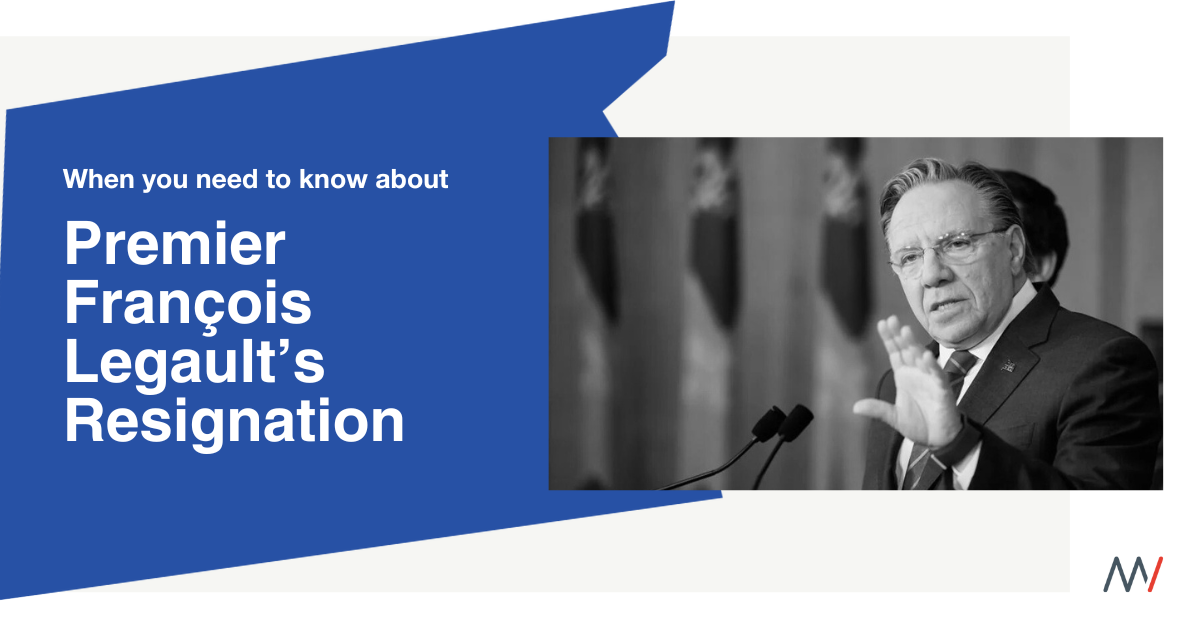
Yesterday morning in Quebec City, Premier François Legault announced his intention to step down as Premier and leader of the Coalition Avenir Québec. He will remain in the role until the party completes a leadership race to choose his successor.
Legault’s decision follows months of very low approval ratings for both him and the CAQ, driven in part by backlash over controversial health-care legislation and the resignation of seven MNAs, including Health Minister Christian Dubé.
Legault founded the CAQ in 2011 and led the party to two majority governments in 2018 and 2022. While he had previously signalled his intention to run again, continued poor polling—despite a strategic shift to the right last fall—persisted into 2026. With a provincial election scheduled for October 5, 2026, Legault concluded that the party could not recover under his leadership.
This morning’s Pallas Data survey shows the CAQ tied for 4th place:
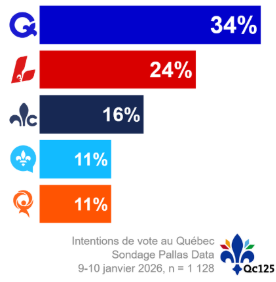
For now, the outcome of the next Quebec election remains uncertain, with both the CAQ and the Quebec Liberal Party in the process of choosing new leaders. The Parti Québécois continues to hold a strong lead in the polls, although it’s important to keep in mind that, according to the most recent public polling, support for Quebec separation remains at its lowest range in 30 years. The race remains fluid as the political landscape shifts.
The CAQ is expected to announce the rules and timeline for its leadership race in the coming weeks. Speculation is already building around potential high-profile candidates, including former Desjardins Group president and CEO Guy Cormier and media host and former Quebec opposition leader Mario Dumont, as the party searches for a “Mark Carney–style” candidate to reset momentum. Current ministers such as Geneviève Guilbault, Simon Jolin-Barrette, Sonia LeBel, and others may also consider entering the race.
In the meantime, Legault will remain Premier, similar to Justin Trudeau’s brief period in office after announcing his resignation in early 2025. While day-to-day government operations are expected to continue, decision-making will likely slow as attention turns to the leadership contest and uncertainty grows. As ministers declare their leadership intentions, they are expected to step aside, triggering a cabinet shuffle.
Until now, stakeholders had viewed June as the key window to advance priorities before Quebec entered full campaign mode. That timeline is now less certain and will depend on when a new CAQ leader is chosen and whether the election proceeds in October or is called earlier.
If you’re looking for clarity on this important moment and need to know what it means for your organization, contact us today at info@mcmillanvantage.com.
Team Vantage is here to help you navigate this fast-changing environment and position your company for success.
